

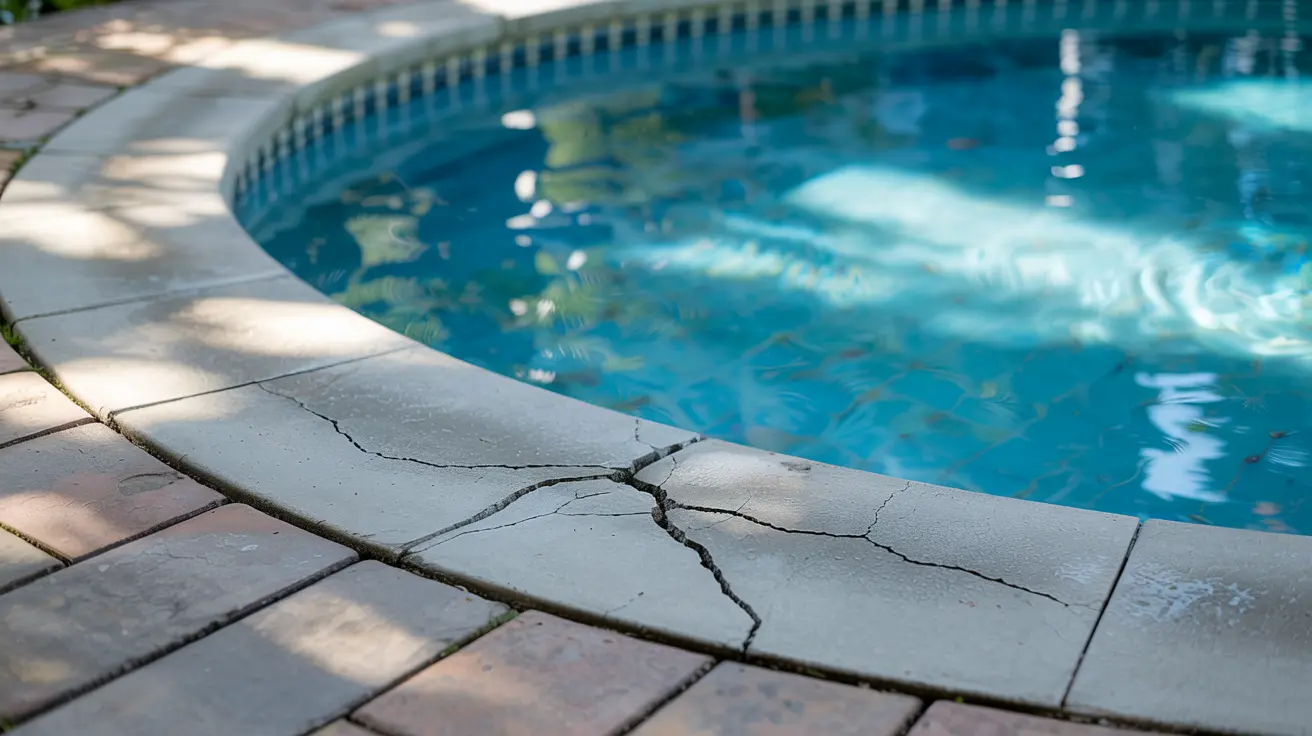

How to Detect Pool Cracks & Leaks
Not all cracks lead to leaks, and not all leaks come from visible cracks. Here’s how to check:
Signs of Cracks in Your Pool
- Visible cracks on the pool floor, walls, or steps
- Uneven tiles or shifting coping (the edge around your pool)
- Rough patches on plaster pools
Signs of a Pool Leak
- Unusual water loss (more than 1/4 inch per day)
- Increased water bills
- Air bubbles in the pump system
- Soggy areas around the pool deck
Repairing Small Surface Cracks
Small cracks (also called cosmetic or surface cracks) are common in concrete and plaster pools due to Dubai’s hot weather and temperature fluctuations. If your pool has large cracks that expand over time, water can seep into the foundation, causing serious damage. This usually happens in older pools or due to poor installation.
Professional repairing structural cracks will typically demand draining the pool to fully dry the affected area. Then the damaged area must be repaired and structurally reinforcement, potentially using special carbon fiber or steel staples to prevent further movement, crystalline injections, and other high strength sealants, before plastering and resurfacing returns the repaired pool back, ready for use, and blended with its original design and look.
Repairing Leaks in Pipes and Equipment
Sometimes, the leak isn’t in your pool structure but in the plumbing system.
Common Pool Leak Source
Pump and filter connections—look for dripping water.
Skimmers and drains—A cracked skimmer or main drain can leak water.
Underground pipes—If you notice soft, wet spots in your yard, you might have an underground leak.
Fixing Equipment Leaks
Tighten loose fittings – Check and secure any loose plumbing connections.
Replace worn-out O-rings and seals – This is an easy and cheap fix!
Use leak sealant for minor pipe leaks – Epoxy sealant can temporarily fix small leaks.
Call a professional for underground leaks – This requires specialized leak detection equipment.
How to Prevent Future Pool Cracks & Leaks
Once you’ve repaired your pool, preventative maintenance is key to avoiding future issues.
Regular Inspections
Check your pool shell every 6 months for early signs of cracks. Inspect pipes and equipment monthly for leaks.
Maintain Proper Water Chemistry
Unbalanced pH and chlorine levels can weaken pool surfaces, making them more prone to cracking. Test your water weekly and adjust chemicals as needed.
Avoid Draining Your Pool Too Often
Water helps support your pool structure. If you drain it improperly, the pool can crack due to pressure changes—especially in Dubai’s extreme heat.
Final Thoughts
Cracks and leaks can turn into expensive problems if ignored. Whether you’re dealing with a small surface crack or a major structural issue, taking action early will keep your pool in top shape for years to come.
Surface cracks? DIY fixes can work.
Major structural cracks? Call Wavepoint Pools for professional advice and solutions.
Leaks in pipes and equipment? We will check connections and replace worn-out parts.
Prevent future issues with regular maintenance and balanced water chemistry.
Have you noticed cracks or leaks in your pool? Let us know —we have the best solutions!

.png)



.png)

.png)
.png)